

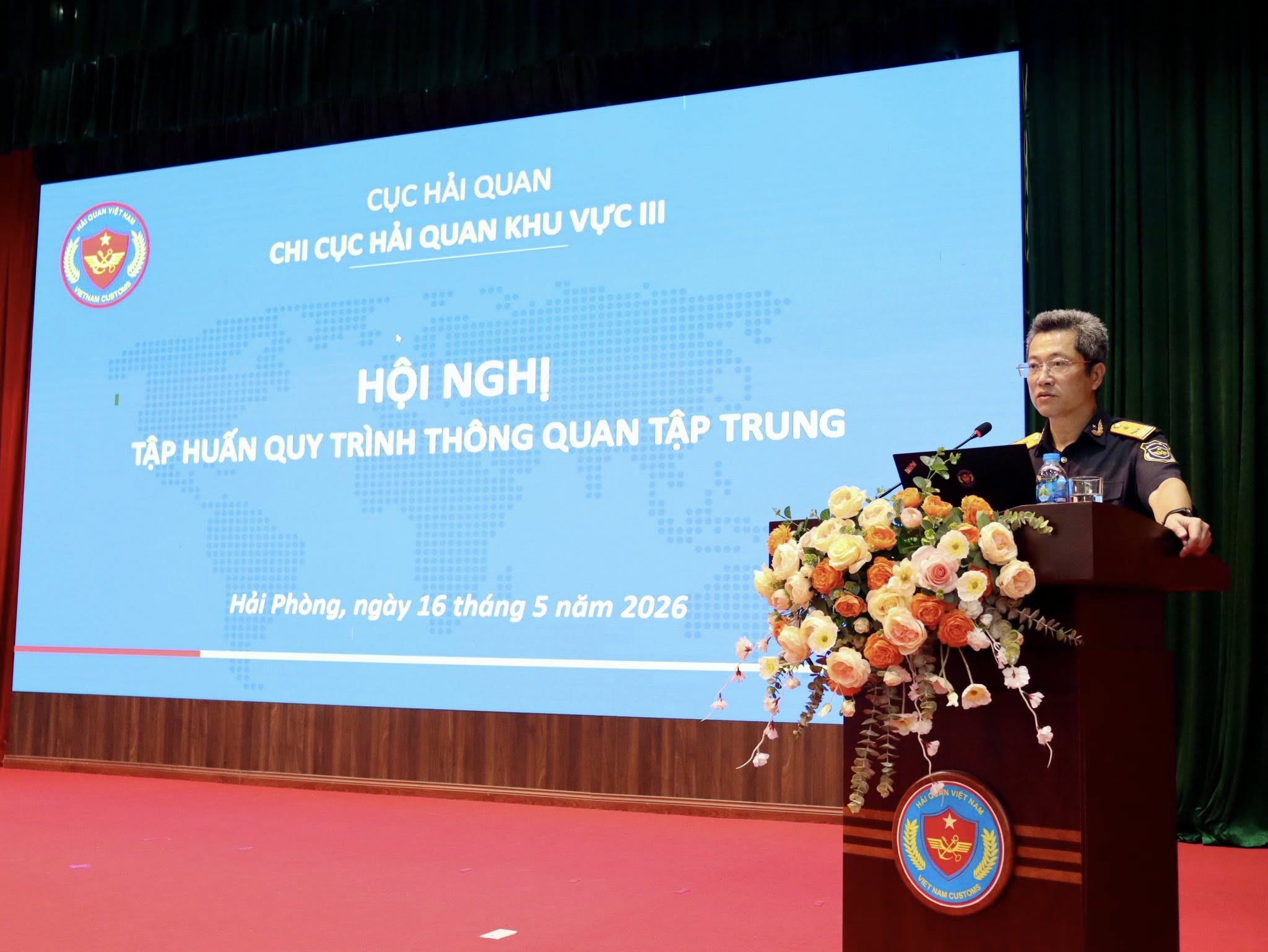
At a glance: Vietnam’s General Department of Customs officially launched the Centralized Clearance Model (CCM) on a full digital platform at Customs Sub-Department Region III (Hai Phong) as of June 1, 2026, under Decision 702/QĐ-CHQ. A revised penalty framework takes effect July 1, 2026, tightening enforcement around declaration data accuracy and post-clearance audit compliance. Businesses moving goods through Hai Phong should review their documentation workflows now.
What Is the Centralized Clearance Model (CCM)?
The CCM represents a structural shift in how customs declarations are processed in Vietnam. Rather than handling clearance at individual border gates or port-level sub-departments, declarations are routed to a centralized digital processing unit — in this case, Customs Sub-Department Region III covering the Hai Phong port cluster, one of Vietnam’s busiest trade gateways.
Under the CCM framework, customs officers review and process declarations remotely, with physical inspections coordinated separately at the point of entry. The model is designed to reduce clearance times, standardize decision-making, and eliminate inconsistencies that arise from decentralized processing.
The June 1 launch under Decision 702/QĐ-CHQ marks the formal operationalization of the digital CCM platform — moving beyond pilot phases to full deployment at one of the country’s most critical logistics nodes.
Two Changes, One Deadline
What Changes for Importers and Exporters
-
Data must be accurate at submissionUnder the CCM, declarations are reviewed by officers with no physical presence at the port. There is no opportunity for informal clarification or on-the-spot correction — errors will result in holds or rejections.
-
Document submission is fully digitalCommercial invoices, packing lists, certificates of origin, and permits must be uploaded in the correct format through authorized electronic systems. Physical document submission is no longer accepted as a primary channel.
-
Post-clearance audit exposure increasesCentralized processing generates a more complete and searchable data trail. Documentation inconsistencies that previously went unnoticed may surface during post-clearance audit cycles.
The revised framework specifically targets data accuracy and post-clearance audit compliance. Key provisions include stricter penalties for inaccurate or incomplete declaration data at the time of submission, enhanced enforcement for post-clearance audit non-compliance, and tighter timelines for responding to customs queries. The alignment with the CCM launch signals a deliberate move toward active enforcement of data quality standards — not just system modernization.
Why Hai Phong Matters
Hai Phong is Vietnam’s primary northern port complex and the main gateway for export flows from manufacturing clusters in Hanoi, Bac Ninh, Hung Yen, and Hai Duong — major hubs for electronics, machinery, and consumer goods. Delays or compliance issues at this node propagate quickly through production and delivery schedules.
The CCM rollout at Region III is also being watched as a model for national rollout. If the Hai Phong deployment proceeds smoothly, similar centralized digital clearance models are expected to be extended to other customs regions, including Ho Chi Minh City.
What Businesses Should Do Before July 1
-
1Audit your declaration data qualityReview recent declarations for accuracy in HS classification, declared value, country of origin, and supporting documentation. Identify recurring inconsistencies before the new penalty framework takes effect.
-
2Ensure digital document readinessConfirm that your logistics providers and customs brokers are submitting documentation through the correct digital channels and in the required formats for CCM-processed declarations.
-
3Brief your customs broker on CCM requirementsIf your broker has been handling declarations under legacy processes at Hai Phong, confirm they have updated their workflows to align with the centralized model.
-
4Review post-clearance audit exposureAssess historical declaration records for items that could attract post-clearance scrutiny — particularly around valuation and HS classification.
-
5Build buffer time into Hai Phong shipment schedulesDuring the transition period, processing times may be less predictable. Build appropriate buffer into delivery commitments for cargo moving through the region.
Looking Ahead
The CCM launch and the accompanying penalty framework represent the most significant operational change to customs processing at Hai Phong in recent years. For businesses and logistics operators with regular cargo flows through northern Vietnam, proactive preparation before July 1 is strongly advisable.
Voltrans Logistics will continue to monitor implementation progress and publish updates as further guidance is issued by the General Department of Customs. If you have questions about how these changes affect your clearance processes or documentation workflows, our team is available to assist.