
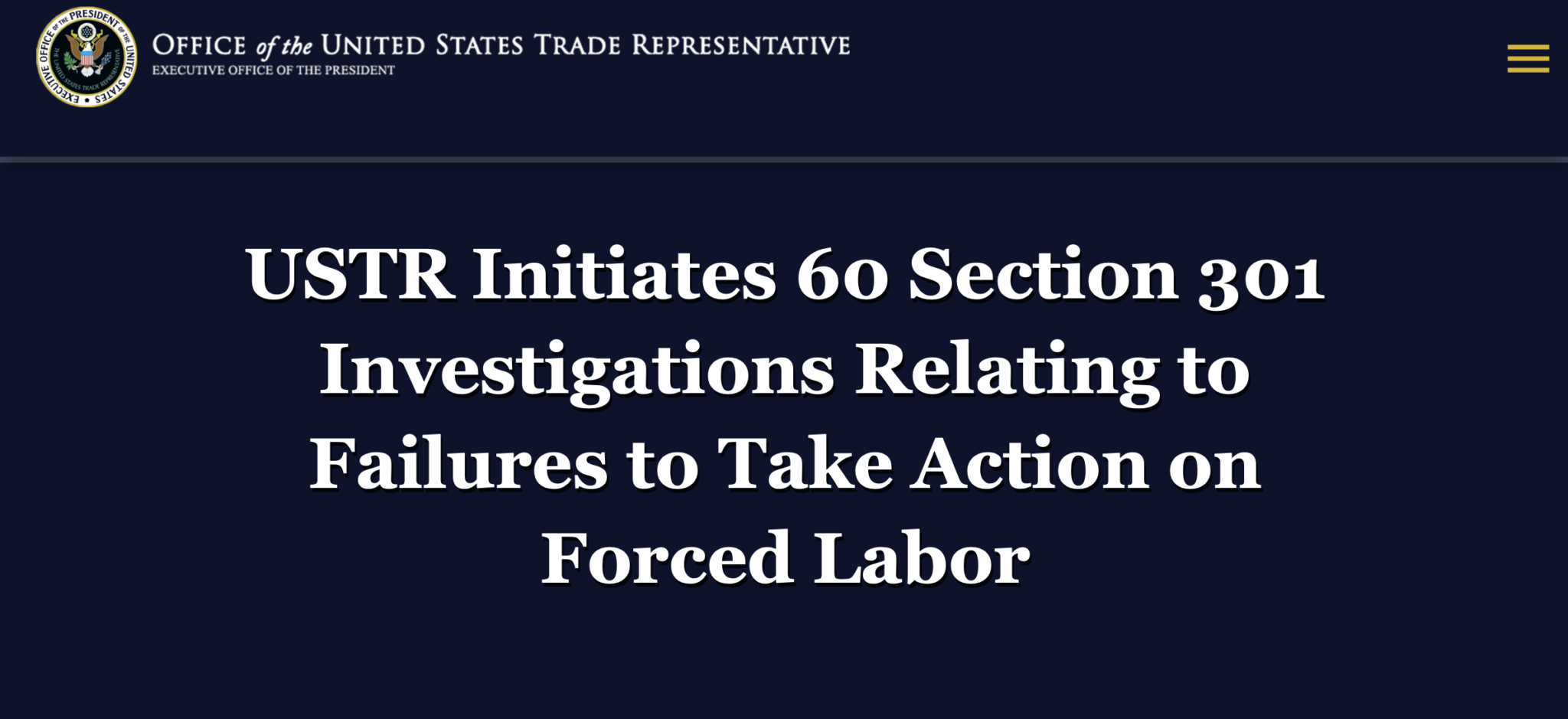
At a glance: On June 2, 2026, USTR released findings from 60 Section 301 investigations into forced labor practices globally. Vietnam was among the countries recommended for an additional 12.5% tariff. This development runs parallel to the Section 301 IP investigation launched May 29 — placing Vietnam at the center of two concurrent U.S. trade probes with potentially compounding tariff implications.
A Second Front: What Is the Forced Labor Section 301 Investigation?
While the Section 301 IP investigation (covered in our previous post) examines Vietnam’s intellectual property enforcement practices, this second probe operates under a distinct legal track — targeting labor practices in the supply chain, specifically the use of forced or prison labor in the production of exported goods.
USTR released results from 60 such country-level investigations on June 2, 2026. Vietnam’s inclusion in the group recommended for additional tariffs signals that U.S. authorities view forced labor as a systemic, rather than isolated, concern in Vietnamese export manufacturing.
What the 12.5% Tariff Would Mean in Practice
Vietnam currently benefits from a 20% preferential rate under the existing bilateral trade framework. If the proposed 12.5% additional tariff is applied, importers of Vietnamese goods would face a combined effective tariff rate of 32.5% on affected product categories.
Sectors With Direct Exposure
Textiles & apparel
One of Vietnam’s largest export categories to the U.S., with significant labor-intensive manufacturing concentration in the Mekong Delta and central provinces.
Footwear
Vietnam is among the top three global footwear suppliers to the U.S. market. Brands with deep Vietnam sourcing would face immediate cost pressure.
Wood products & furniture
A high-growth export sector over the past five years, partly driven by supply chain shifts away from China.
Electronics & components
Increasingly significant as multinational manufacturers have relocated assembly operations to Vietnam.
Two Probes, One Country: Understanding the Overlap
It is important to distinguish the two investigations now running concurrently on Vietnam. The two are legally separate and may produce independent outcomes — but their simultaneous progression places compounding tariff risk on the same set of Vietnamese export industries.
| Investigation | Focus | Launched | Comment Deadline |
|---|---|---|---|
| Section 301 – IP | IP protection & enforcement practices | May 29, 2026 | July 2, 2026 |
| Section 301 – Forced Labor | Forced labor in export supply chain | June 2, 2026 (findings) | July 6, 2026 |
Key Dates To Track
What Businesses Should Do Now
The window between now and the July hearings is a critical preparation period. Businesses with Vietnam-sourced supply chains should consider the following actions:
-
1Audit labor compliance documentationSocial compliance certifications, third-party audits, and supplier codes of conduct will be foundational to any customs or regulatory defense if tariffs are imposed.
-
2Map supply chain exposure at the input levelUFLPA enforcement has established that U.S. customs authorities require traceability at the raw material level — not just finished goods. The same standard is likely to apply here.
-
3Submit public comments before July 6Both comment periods represent a direct channel to inform USTR’s final determination. Companies with material exposure should consider formal submissions, individually or through industry associations.
-
4Run tariff scenario modelsModel the cost impact of a 12.5% additional tariff on your current Vietnam-sourced product mix. For sectors already operating on thin margins — footwear and furniture in particular — the impact could be significant.
-
5Monitor for bilateral negotiation signalsVietnam has strong incentives to offer concrete labor reform commitments to avert formal tariff action. Track official statements from both USTR and Vietnam’s Ministry of Industry and Trade.
Looking Ahead
The dual Section 301 track — IP and forced labor — reflects a deliberate and escalating U.S. trade posture toward Vietnam. Whether both investigations result in tariff action, a negotiated package settlement, or a combination of the two remains to be seen. What is clear is that the risk profile for Vietnam-sourced supply chains has materially increased in the span of one week.
Voltrans Logistics will continue to track both investigations and publish updates ahead of each key deadline. If you have questions about supply chain exposure, compliance documentation, or logistics contingency planning, our advisory team is available to assist.