

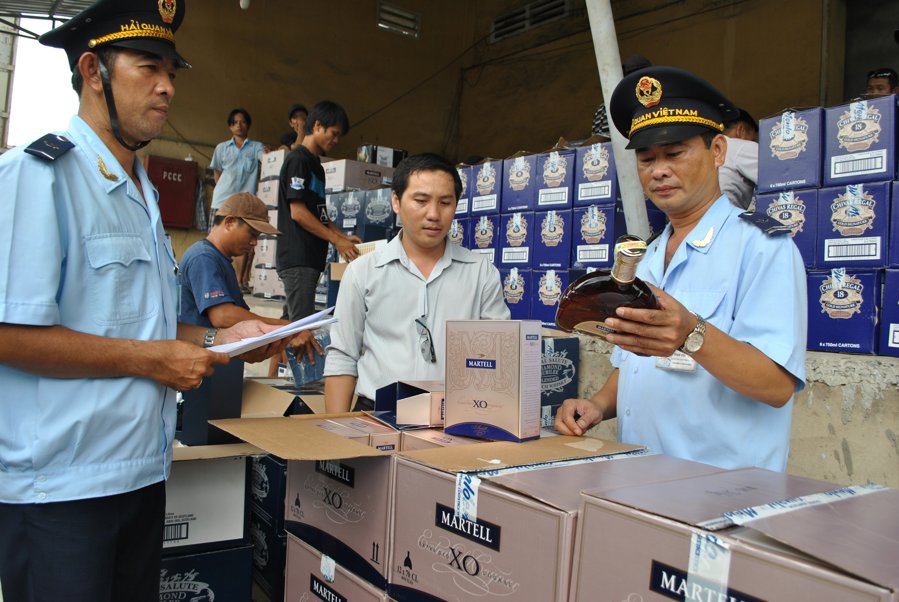
At a glance: On May 15, 2026, the Government issued Decree No. 169/2026/ND-CP on administrative penalties in the customs sector. Effective July 1, 2026, this new decree will completely replace Decree No. 128/2020/ND-CP. Following this, on June 22, 2026, the Customs Department issued Official Letter No. 7743/CHQ-PC, instructing the entire sector to urgently deploy and ensure the unified application of these new regulations. Import-export enterprises now have exactly 9 days left to audit their dossiers, documentation, HS codes, and Certificates of Origin (C/O) before the new penalty framework takes effect.
Decree 169 Takes Effect
Decree No. 169/2026/ND-CP
Penalty Framework
Background: Why a New Decree?
On May 15, 2026, the Government issued Decree No. 169/2026/ND-CP regulating administrative penalties in the customs sector. This represents the most significant legislative overhaul concerning customs compliance in six years, completely replacing Decree 128/2020/ND-CP and Article 2 of Decree 102/2021/ND-CP starting July 1, 2026.
Shortly thereafter, on June 22, 2026, the Customs Department issued Official Letter No. 7743/CHQ-PC, instructing all regional Customs Branches, Post-Clearance Audit Departments, and Anti-Smuggling Investigation Departments to urgently deploy and ensure unified application of the new regulations immediately upon their effective date.
The signal is clear: customs authorities will strictly enforce the new penalty framework from day one — with no “adjustment period” or post-effective date grace window.
Crucial Regulatory Shifts to Note
-
Brand New Penalties for Violations in Electronic Environments (Article 37) For the first time in history, specific administrative fines will be levied on violations occurring within digital and electronic customs environments. This includes errors in e-declarations via the VNACCS/VCIS system, submission of inconsistent e-documents, and fraudulent acts carried out over digital platforms. This is exceptionally critical as Customs aggressively expands the Centralized Clearance Model (CCM).
-
Clarified Incorrect HS Coding Despite Pre-Ruling Guidance — No Longer Exempt (Article 15, New Clause 5) Any instance where an enterprise misdeclares HS codes or tax rates for commodities that have previously received official written guidance, classification notices, or analysis results from customs authorities will be penalized immediately. Traditional mitigating circumstances will no longer apply. Special attention must be paid to commodities that have faced tax assessments or penalties in the past.
-
Updated Expanded Violations Under Articles 8, 10, 12, 13, and 16 The decree introduces several newly punishable offenses aligned with Decree No. 167/2025/ND-CP — specifically targeting origin management, trade documentation integrity, and procedures related to counterfeit goods or Intellectual Property (IP) right infringements.
-
Positive for Business Expanded Exemption Cases (Article 7, Clause 2) The decree explicitly delineates new scenarios where enterprises are exempt from penalties, providing a more transparent legal boundary. Notably, corpus delicti (violating evidence/goods) will not encompass parts of the shipment that were correctly declared, preventing the seizure or freezing of an entire batch due to a minor isolated error.
-
Abolished Removal of 3 Outdated Clauses from Decree 128/2020 Certain non-consequential technicalities have been repealed. This includes the removal of fines for minor errors in volume, description, quality, origin, or HS codes of imported goods that do not affect the total payable tax amount (previously Point b, Clause 1, Article 8). Shortages in tax-suspension warehouses that do not stem from intentional fraud have also been re-evaluated.
Violations that occurred and ended prior to July 1, 2026, but are discovered or reviewed for penalization after July 1, 2026, will adopt the new decree if it carries lighter penalties. However, if the new regulations impose harsher fines, the older rules remain applicable.
Operational Impact: Dossiers currently undergoing Post-Clearance Audits (PCA) at the July 1 transition point may face immediate re-assessment under the new penalty framework. Businesses must audit open files or flagged declarations immediately.
Pre-July 1 Compliance Audit Checklist
Below is the priority checklist designed for trade compliance, import-export, and logistics teams:
-
Verify Documentation ConsistencyEnsure absolute cross-alignment among Commercial Invoices, Packing Lists, Bills of Lading, and Customs Declarations regarding commodity description, quantity, weight, and valuation. Any discrepancy represents an automatic penalty trigger under the new regime.
-
Audit HS Classifications Against Pre-RulingsIf your company has previously received an official HS classification ruling, continuing to declare an alternate or incorrect code will be met with maximum penalties, completely stripping away standard mitigating defenses under Article 15. Audit your recurring import catalogs now.
-
Validate Certificates of Origin (C/O)Confirm that all C/O formatting matches the actual physical cargo and rigorously complies with preferential tariff protocols — particularly for high-volume trade lanes leveraging EVFTA, CPTPP, and RCEP agreements.
-
Prioritize Ongoing Post-Clearance Audits (PCA)Declarations that have passed through initial customs gates but remain under active post-clearance reviews must be reassessed. Initiating voluntary amendments prior to July 1 can shield your enterprise from severe penalties.
-
Evaluate Electronic Declaration WorkflowsWith Article 37 heavily penalizing data transmission flaws, companies must audit their automated data pipes — especially those running through VNACCS/VCIS or the newly deployed CCM hubs.
-
Sync Closely with Your Customs BrokerEnsure that your designated licensed customs brokers have modified their standard operating procedures to match Decree 169 requirements. Official Letter 7743/CHQ-PC eliminates any testing phases.
Decree 169 is not an isolated event. It is part of a broader, synchronized enforcement wave: The Centralized Clearance Model (CCM) in Hai Phong has been active since June 1 with strict data-accuracy fines kicking in July 1; Customs just passed Official Letter 17640/CHQ-GSQL (June 18) tightening counterfeit/IP tracking; and Official Letter 17647/CHQ-GSQL (June 18) enforcing advanced camera tracking on imports.
All paths converge on July 1, 2026. Manufacturing facilities currently front-loading components and raw materials must fortify their compliance lines immediately.
Conclusion
Decree 169/2026/ND-CP is far more than a minor technical amendment — it is a decisive declaration of state intent toward customs management: stricter, highly digitized, and unforgiving toward preventable mistakes. With only 9 days remaining, auditing trade documentation and aligning with a transparent customs broker is no longer optional — it is a critical business continuity requirement.
Voltrans Logistics will continue monitoring implementation updates from the Customs Department as further guidelines emerge. If your company requires professional compliance mapping, file reviews, or customs advisory support, our dedicated team is standing by to secure your trade operations.