
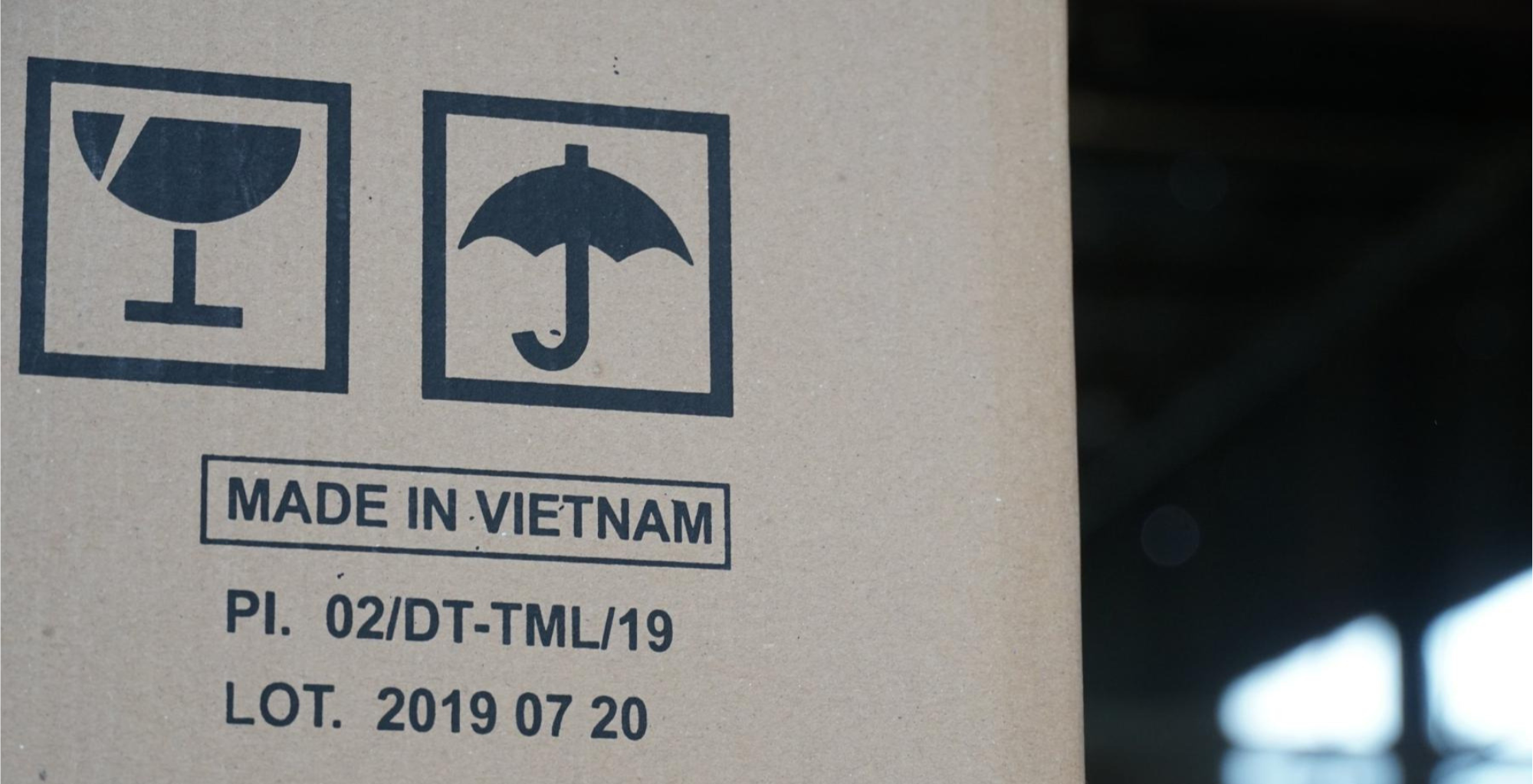
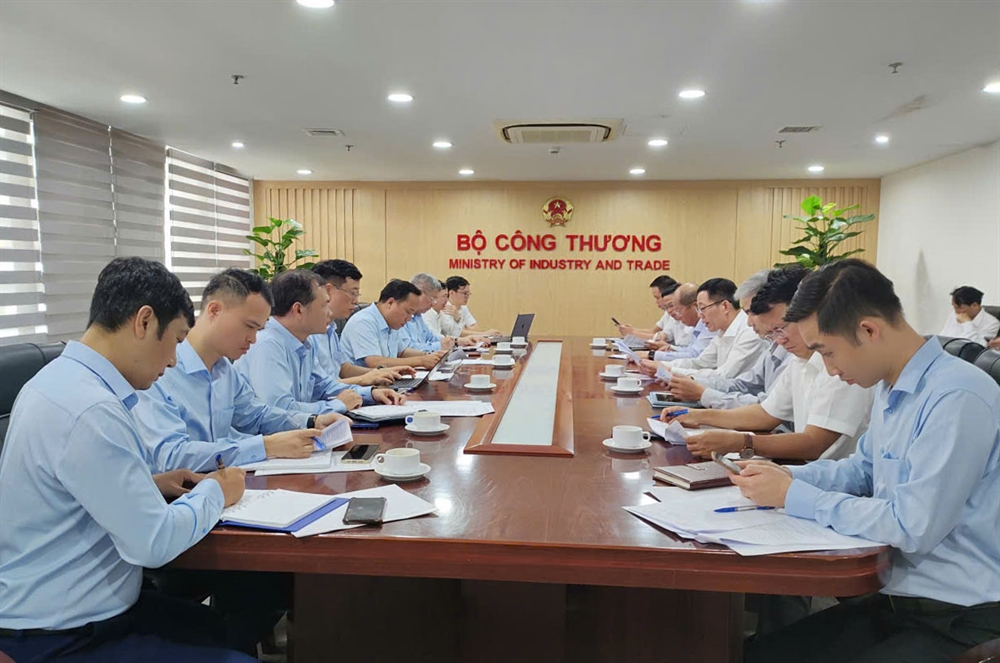
At a glance: On June 9, 2026, Vietnam’s Ministry of Industry and Trade formally submitted to the Government a draft Decree establishing clear criteria for what qualifies as “Made in Vietnam” for goods circulating in the domestic market. The move closes a regulatory gap that has existed for years – and arrives at a critical moment, as Vietnam faces three simultaneous U.S. Section 301 investigations, two of which directly implicate origin fraud and transshipment concerns.
A Gap That Has Existed Since 2019
Vietnam has long had rules of origin for export purposes — governing what qualifies for preferential tariff treatment under the EVFTA, CPTPP, and other trade agreements. But for goods produced and sold within Vietnam’s domestic market, no equivalent legal framework has ever existed.
In 2019, the Ministry of Industry and Trade released a draft circular on Made-in-Vietnam criteria. For several reasons, it was never adopted. In September 2023, a National Assembly committee formally requested the Government to complete the issuance of these criteria. A plan was outlined by the Prime Minister in January 2024. It has taken until June 2026 — seven years after the first attempt — for a draft decree to finally reach the Government level.
In the absence of clear criteria, Decree 43/2017 on goods labelling allowed manufacturers to self-declare origin with no objective standard to meet — a loophole that created significant exposure to origin fraud and transshipment abuse.
What the Draft Decree Proposes
Enterprises that meet the criteria may voluntarily label their products “Made in Vietnam,” “Manufactured in Vietnam,” or “Origin: Vietnam” — but bear full legal responsibility and must be able to prove origin upon request from competent authorities.
Why the Timing Matters
The submission of this draft on June 9 is not incidental to the current trade environment. Vietnam is simultaneously under investigation by USTR on three Section 301 fronts — intellectual property, forced labor, and structural excess capacity. The structural excess capacity investigation explicitly flags Vietnam’s assembly-and-export model. The June 3 CBP executive order identifies transshipment and origin fraud as primary enforcement targets.
The “Made in Vietnam” decree serves a dual purpose: it strengthens consumer protection domestically, and it provides a concrete, verifiable standard that Vietnamese authorities can point to in bilateral trade negotiations with the United States. Whether it will be sufficient to satisfy U.S. trade authorities — and whether it can be implemented quickly enough to influence the outcome of active Section 301 investigations — remains an open question.
The Long Road to Enforcement
The draft’s journey from submission to enactment, and from enactment to meaningful enforcement, is not guaranteed to be short. Vietnam has attempted to establish these criteria before and failed to finalize them. The current external pressure from U.S. trade investigations creates stronger incentive to proceed — but implementation capacity at the enterprise and customs level will ultimately determine whether the decree changes behavior on the ground.
For foreign-invested manufacturers operating in Vietnam, the decree’s passage would raise compliance expectations around origin documentation, self-certification procedures, and supply chain traceability — particularly for companies sourcing significant Chinese-origin inputs for Vietnamese-market assembly operations.
What Businesses Should Monitor
-
Track the decree’s passage timelineWith a Government submission now filed, review and approval is the next step. Given the current trade environment there is political incentive to move quickly — but no formal deadline has been announced.
-
Review self-certification practices nowCompanies currently labeling products “Made in Vietnam” under the Decree 43/2017 self-certification model should assess whether their production processes would meet the “substantial transformation” standard proposed in the draft.
-
Assess input sourcing documentationThe draft’s emphasis on traceability means companies relying on Chinese-origin inputs for Vietnam-market production should begin preparing documentation that demonstrates compliance with the new criteria.
-
Watch for the export-side parallelThis draft covers domestic market goods only. A separate regulatory track covering rules of origin for exports is also under development. Together, the two frameworks will define the full compliance landscape for origin in Vietnam.
Looking Ahead
Seven years after the first attempt, Vietnam now has a draft decree on the table — and stronger external pressure than ever to see it through. The outcome will matter not just for domestic market compliance, but as a signal to U.S. trade authorities about whether Vietnam is taking substantive steps to close the regulatory gaps that have made origin fraud possible.
Voltrans Logistics will continue to monitor the decree’s progress and publish updates as the Government review proceeds.